I know that when it's time to assign a formal paper, it's fairly typical for a composition teacher to hand out specific essay topics, but I don't always do that. I prefer that my students go through the painful process of figuring out their own topics. After all, they've already read eleven essays, written five short response papers, and discussed all kinds of ideas in class. It's the third week of the semester. By now, each one of them ought to have something to say.
Besides, I tell them, college is not high school. From now on, they need to come up with topics on their own. It's more like real life. In real life, an English teacher does not appear in the clouds and hand you essay topics.
We walked through the brainstorming process today – coming up with a whole blackboard full of ideas. By the end of the class, many of the students were coming up with paper topics and scribbling them down. Stealing a phrase from Julie, I told them I expected them to bring an elevator pitch to class on Friday. As Julie explained over on her blog, an elevator pitch is an overview that can be delivered in the time span of an elevator ride, say thirty seconds or less.
Hollywood loves the elevator pitch. Through some twist in the plot, the underdog gets into an elevator with some important person, and he's got thirty seconds to convince Important Person that his idea is brilliant. We don't see the whole thirty seconds, we simply hear the first ten words, and then we cut to the next scene: the underdog walking out of the elevator with a triumphant smile. Oh, that's not the end of the movie, because always there is some love triangle that further complicates the plot, but that is the essence of the elevator pitch.
My students loved my dramatic explanation -- it's possible I included way more of the movie plot than I strictly needed to -- and I figured elevator pitch sounded way cooler than thesis statement.
But then my mid-morning class decided to be literal about the whole thing.
"Okay, let's actually do it on the elevator."
"WHAT?" I said. I hate elevators; they know this about me.
"Sure," one kid said, "We can all fit on the elevator."
"Let's do them on the elevator!" everyone started chiming in. My students never miss an opportunity to tease me.
"I hate riding the elevator!" I said. "I'm claustrophic. I get motion sick."
"We will help you face your fears, " Curly Hair said, in the kind of fake calm voice that these kids have heard their whole lives. "We are here for you. Remember, in a writing class, you have to allow yourself to be vulnerable."
"You're all crazy," I said. "Why would we want to stand all crowded together in a box that moves up and down? How does that even make sense?"
"It'll be more realistic," said Dark-haired Woman.
"YOU ARE NUTS IF YOU THINK I AM GOING INTO AN ELEVATOR WITH ALL OF YOU."
"I'm asking you to challenge yourself," said Curly Hair, still in the fake teacher voice.
I tried to glare at him, but his imitation of me was too funny. I had to laugh.
They left happily chatting about their paper topics and assuring me that on Friday, they were going to help me face my fear of the elevator. I think they are kidding. I mean, I am pretty sure they don't really want to do these on the elevator.
But I am thinking I should have just called it a thesis statement.
September 13, 2006


September 12, 2006
Skyline
I remember the silence. It was five years ago, but I can still see their faces. They were all eighteen years old, most living away from home for the first time. Most had been awake all night, unable to pull themselves away from the horrific images on the television screen, trying desperately to get through jammed phone lines, and waiting, waiting for news, waiting to hear who was alive and who was dead. The early morning truck had delivered newspapers to the building, and a few students carried the papers into class with them.
These students have all graduated and all gone onto grad school or jobs. Many have returned home, to the City Like No Other, the city whose skyline was changed dramatically that day. This week, I am thinking of them.
SKYLINE: SEPTEMBER 12, 2001
for nick
a jedi knight from brooklyn
who wants to change the world
who during class once took a vote
on which body part he should pierce
for brooklyn mike and long island sean
who claimed on the botany hike
that they were getting attacked
by flesh-eating spiders
for manhattan nick
who almost got thrown out of school
for rock-climbing in the elevator shaft
for jen who says the symbol
of her home community is the staten island landfill
for crissy who will forever clash with her feminist teacher
about whether or not she should work at hooters
for eldon and donald
who had to explain to me what a ho was
for dave from queens who thinks pot should be legal
for phil who says
gay men rock
for hugh who is not afraid to wear a badge of silence
i want to write a poem for my students
but today there is nothing i can teach them
that they do not already know
more deeply than i do
for evan who once swam in the fountain outside the world trade center
for lauren who wears a ny city transit card on her sleeve
who plans to be a vet
although we all think she should run for president
"it’s amazing" lauren writes "how close people
get to one another when they are scared"
for ellie who puts exquisite tiny drawings
inside the pupil of an eye
who sees things no one else sees
for gena who says that leaving her neighborhood
was escaping the abyss
"i felt so guilty" writes gena "safe here upstate
when everyone i love was in danger"
for sasha who has sad eyes
who doesn’t want to be here
for andrew who finds wildlife in queens
for greg who looks way too young on his military id
who is so skinny
that they will send him into the crevices
to search for bodies
if i could write a poem today
if i had words for this silence
i would dedicate it to my students
for mike who lost his uncle
for steve who lost his cousin
for daven who will go to two funerals in one day
for wellington
who taught me the spanish word for hope
for all these kids who always looked to the sky
to find the twin towers
to orient themselves
to find their way home
These students have all graduated and all gone onto grad school or jobs. Many have returned home, to the City Like No Other, the city whose skyline was changed dramatically that day. This week, I am thinking of them.
SKYLINE: SEPTEMBER 12, 2001
for nick
a jedi knight from brooklyn
who wants to change the world
who during class once took a vote
on which body part he should pierce
for brooklyn mike and long island sean
who claimed on the botany hike
that they were getting attacked
by flesh-eating spiders
for manhattan nick
who almost got thrown out of school
for rock-climbing in the elevator shaft
for jen who says the symbol
of her home community is the staten island landfill
for crissy who will forever clash with her feminist teacher
about whether or not she should work at hooters
for eldon and donald
who had to explain to me what a ho was
for dave from queens who thinks pot should be legal
for phil who says
gay men rock
for hugh who is not afraid to wear a badge of silence
i want to write a poem for my students
but today there is nothing i can teach them
that they do not already know
more deeply than i do
for evan who once swam in the fountain outside the world trade center
for lauren who wears a ny city transit card on her sleeve
who plans to be a vet
although we all think she should run for president
"it’s amazing" lauren writes "how close people
get to one another when they are scared"
for ellie who puts exquisite tiny drawings
inside the pupil of an eye
who sees things no one else sees
for gena who says that leaving her neighborhood
was escaping the abyss
"i felt so guilty" writes gena "safe here upstate
when everyone i love was in danger"
for sasha who has sad eyes
who doesn’t want to be here
for andrew who finds wildlife in queens
for greg who looks way too young on his military id
who is so skinny
that they will send him into the crevices
to search for bodies
if i could write a poem today
if i had words for this silence
i would dedicate it to my students
for mike who lost his uncle
for steve who lost his cousin
for daven who will go to two funerals in one day
for wellington
who taught me the spanish word for hope
for all these kids who always looked to the sky
to find the twin towers
to orient themselves
to find their way home
September 10, 2006
Leaving the classroom
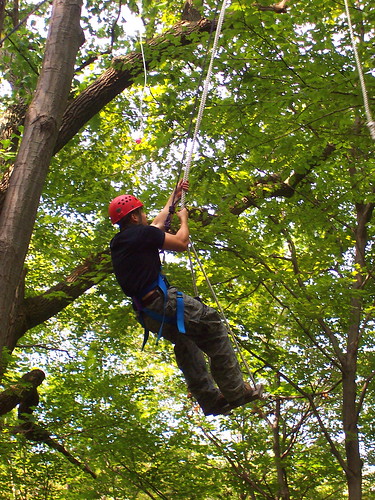
When I take my students outside of the classroom, different aspects of their personalities emerge. After an overnight retreat to a nature center, I can see which students have established themselves as leaders. I can see which ones are shy, which ones are extroverts. I learn which ones love a bonfire, which ones play the guitar, and which ones are homesick. I learn about their families, their secret talents, and which card games they play. I know which ones are afraid of heights, and which ones are willing to dangle from the treetops without hesitation.
What does this stuff have to do with teaching?
Students, especially those who are majoring in a hard science, often think of themselves as bad writers. In fact, they are often scared of writing. So I try to create an atmosphere in the classroom in which students can talk about their fears, in which they aren't afraid to be vulnerable by sharing their writing with their peers. So when we do a high ropes course, each of us in turn climbing high into the trees to tightrope walk across a wire or jump off a platform forty feet in the air, and we talk about our fear of heights, it is really just a practice run for the academic fears we will face in the classroom. All of us need to feel comfortable feeling vulnerable with each other.
This includes me, of course. The week before we leave on the retreat, I make a point of telling the students that I am afraid of heights. And it's true. When I have to climb forty feet into the air, I have so much adrenaline going through my veins that it's ridiculous. And when I have to leave the comforting trunk of a tree to tightrope walk across a strand of wire, I cannot look down. Despite the belay line, I am terrified. What's nice is how encouraging and supportive my students will be, all cheering from down below and yelling supportive comments.
Any college student needs to learn how to work in a group. Scientists collaborate, business people collaborate, firefighters collaborate. I tell my students that any career they go into will likely involve some element of working with other people -- unless of course, one of them gets hired as the person who sits all by himself in the tower in the mountain and watches for smoke. So from the beginning, I watch the students to be conscious of the groups they form and the roles they play, in hopes that I can help them be aware of some of these roles, to understand their own strengths and weaknesses, and to sometimes even step out of those roles.
Sometimes I will get students who are pretty self-aware. For instance, Brown Baseball Cap was silent as he climbed up the spikes on the tree to get to the wire on the high ropes. After he walked across the wire and it was time to come down, he began to joke around, twisting his body, fluttering his arms, and talking in the voice of Glinda, the good witch from the Wizard of Oz. When he reached the ground, his classmates were laughing at his antics, and he said, "See? Humor is one way to mask your fear."
Of course, developing critical thinking skills in the classroom means that my students need to learn how to engage in discussion, to analyze what we've read, to put information into a context, and to evaluate information. As I get to know my students, I can steer the discussion towards issues and topics they care passionately about. It helps, of course, that most of my students have chosen to come to a specialized college, but it's even better when I know why they are interested in environmental issues and which topics within that realm interest them the most. It helps me to know which students hunt, which ones plan to go to vet school, and which ones are vegan. Informal conversations often lead to a paper topics.
The other reason, of course, for taking my students out of the classroom is the most obvious one: it's fun. And I learn so much from my conversations with them, from the stories they tell about their own life experiences. Teaching works best when it's reciprocal.
September 08, 2006
Avoiding bloodshed
On the first day of class, my three sections of first year students – sixty students who all live together on one floor of a residence hall – are a blur of faces, most of them quiet at this start of their college careers. But by the second week, I've learned their names and personalities. I can even tell the identical twins apart. And it no longer seems strange when one student talks about how he is flying his bird after class.
Last week, my students read aloud essays in which they each described something that could serve as a symbol of their home community. My urban students chose such things as the metro card, the Famous Alliterative Bridge, or the Huge Island Landfill. Other students in the class chose a cow, a pitchfork, or a pine tree. These discussions about our home community are the first step in forming this group of sixty students into a learning community.
By now our classroom discussions have turned lively. Once I know the students, I can figure out how to engage them. By the second week, I know which students like to debate and play devil's advocate, which students can be counted on to play peacemaker, which students love to go off on crazy tangents that can be surprisingly productive, and which students I can rely on to keep us on track. I know which students will come up with a sophisticated response and which ones will want to joke around. By now too, students have moved around the classroom and settled into seating choices that are incredibly revealing. I have twenty students in each section and we sit around a square of tables. Students who aren't getting along with their peers and who feel the need to be protected usually sit very close to me. A bully will sit in the far corner. The academically gifted students almost always sit right in the middle of either side table.
Later in the semester, we will talk about the roles we play in the classroom, and I will invite students to move out of their comfort zones: for a talkative student, this might mean staying quiet and listening more. For a quiet student, this might mean speaking up more, taking that risk. But for now, I am just watching their personalities emerge as we wrestle with the issues raised by our readings: what is nature? what is wilderness? how are landscape and story connected?
"Are we allowed to talk about politics in here?" one student asked today, a bit hesitantly. I get this all the time from students. Many claim that they come from high schools or communities where talking about politics is taboo.
"Well, we are reading a book about environmental issues," I said. "I don't see how we could possibly make it through the semester without talking about the Bush administration."
"There's going to be bloodshed," one student said dramatically.
And he was only partly kidding. The urban/rural geographic divide between my students means that the class contains students from very different cultures. Before we even get into a discussion, I know we will have a real range of political opinions in the room.
Is it possible for staunch conservatives and progressive liberals to have a discussion in which they both listen and learn? I promised them that we would begin class on Monday with that topic, and the we would brainstorm ways to make it happen. "World peace by the end of the semester" is our motto. In the meantime, I am leaving at 7:30 am tomorrow morning to take all sixty students on an overnight retreat at a nature center located near Gorgeous Town. I am guessing that a few political discussions might creep into our conversations around the campfire.
Last week, my students read aloud essays in which they each described something that could serve as a symbol of their home community. My urban students chose such things as the metro card, the Famous Alliterative Bridge, or the Huge Island Landfill. Other students in the class chose a cow, a pitchfork, or a pine tree. These discussions about our home community are the first step in forming this group of sixty students into a learning community.
By now our classroom discussions have turned lively. Once I know the students, I can figure out how to engage them. By the second week, I know which students like to debate and play devil's advocate, which students can be counted on to play peacemaker, which students love to go off on crazy tangents that can be surprisingly productive, and which students I can rely on to keep us on track. I know which students will come up with a sophisticated response and which ones will want to joke around. By now too, students have moved around the classroom and settled into seating choices that are incredibly revealing. I have twenty students in each section and we sit around a square of tables. Students who aren't getting along with their peers and who feel the need to be protected usually sit very close to me. A bully will sit in the far corner. The academically gifted students almost always sit right in the middle of either side table.
Later in the semester, we will talk about the roles we play in the classroom, and I will invite students to move out of their comfort zones: for a talkative student, this might mean staying quiet and listening more. For a quiet student, this might mean speaking up more, taking that risk. But for now, I am just watching their personalities emerge as we wrestle with the issues raised by our readings: what is nature? what is wilderness? how are landscape and story connected?
"Are we allowed to talk about politics in here?" one student asked today, a bit hesitantly. I get this all the time from students. Many claim that they come from high schools or communities where talking about politics is taboo.
"Well, we are reading a book about environmental issues," I said. "I don't see how we could possibly make it through the semester without talking about the Bush administration."
"There's going to be bloodshed," one student said dramatically.
And he was only partly kidding. The urban/rural geographic divide between my students means that the class contains students from very different cultures. Before we even get into a discussion, I know we will have a real range of political opinions in the room.
Is it possible for staunch conservatives and progressive liberals to have a discussion in which they both listen and learn? I promised them that we would begin class on Monday with that topic, and the we would brainstorm ways to make it happen. "World peace by the end of the semester" is our motto. In the meantime, I am leaving at 7:30 am tomorrow morning to take all sixty students on an overnight retreat at a nature center located near Gorgeous Town. I am guessing that a few political discussions might creep into our conversations around the campfire.
Those email requests
I've got this little red circle on my screen that shows the number of unread emails I've got, and during the first two weeks of the semester, so many emails get sent to faculty that red circle spins like a roulette wheel. Mostly, the emails say something vaguely positive about the summer and then ask, in what is always a deliberately cheerful way, for our time. We can volunteer to judge contests, run workshops, work with elementary school kids, or help out at an educational booth at the state fair. Of course, it is not always just our time we are asked to give: a chemistry professor sent out an email saying that he is looking for people who can donate fingernail clippings. Yes, fingernail clippings, to be analyzed in a graduate course in stable isotypes. I don't know what all goes in our chemistry department, but I will say that they write the most concise and endearingly bizarre emails, always straight to the point, with little embellishment or even explanation.
September 07, 2006
Paper clips for Algernon
On Tuesday, the night before the public schools opened, I went shopping for school supplies. Yes, it is true that the school supply lists had been on our bulletin board since June but somehow I never get around to shopping until I absolutely have to. I tried to palm the task off on my husband, but he did all the back-to-school shopping last year while I was on a raft trip, so he seemed to think it was my turn this year. Of course, I still think I should get massive credit for the fact that I took With-a-Why clothes shopping last week-- and even got him to try on pants -- a feat more formidable than anything I did on the white water rafting trip.
To be honest, I was impressed with myself that I went the night before, which in my book counts as ahead of time. I knew that I would end up going back to the store once the kids came home from school with new items to add to the list, which means the trip was a waste of time, but going the night before gave me that virtuous feeling that I am a good parent who does stuff ahead of time for my darling children. And even though I hate most kinds of shopping, I have to admit that I kind of like the office supplies store. Even though I now do most of my writing on a computer, I still get a thrill from seeing reams of blank paper, boxes of new pens, and stacks of clean new notebooks.
Tuesday night, many of the other parents in the store were clutching the same list that I had in my hand. I must looked like an expert on school supplies (how sad is that?), because many of them kept consulting me, rather than the teenagers in the red shirts who clearly worked in the store.
One woman, whose oldest son is the same age as my youngest, said to me nervously, "The list says he needs a red 2-inch binder."
She gave me a look of panic. "They are out of red binders!"
She was right. There were black binders, blue ones, and white ones, but no red ones left. I suspect the red ones were snatched up by the other hundreds of sixth grade parents who didn't wait until the last minute to buy supplies.
I shrugged. "Yeah, With-a-Why needs one too. I think I'll get the white one with the plastic sleeve and stick red construction paper in there."
She looked at me, aghast at my daring. "Would that be allowed?"
"I don't know," I said seriously. "Many a sixth grader has failed science because his binder wasn't red enough."
She laughed.
"Don't worry too much about getting everything on the list," I told her. "Hyper Son will come home with a whole different list tomorrow."
"What?" She looked at the list and back at me.
"Yep," I said. "The September list never exactly matches the one they give out in June. Some of it depends on which teachers they get."
She looked betrayed. "Really?"
"Yep."
"Then why do they give us the list?"
That's a good question. Why do schools bother to sent out these lists in June when everyone (except the new parents) knows darn well that the kids will come home with a different list on the first day of school?
Maybe it's just a tradition. I come from a community that is big on tradition. The words "We've always done it this way" are an accepted explanation for everything from asking English teachers to stick to a list of "classics" (that is, literature by anyone with pale skin and a penis) to scheduling parent/teacher conferences during the day when most parents are at work. There is seemingly no need to recognize that anything has changed since the 1950s.
Maybe it's to appease the nervous parents who call the school asking what their child needs. I mean, I was feeling all virtuous about buying supplies the night before, but many of the parents in the store acted like they felt guilty, as if somehow they should have bought paper and notebooks in June and let them season over the summer like firewood.
Maybe it's a racket thought up by the office supply store to get us to buy stuff our children won't ever use. I mean, think of all the families who now possess 2-inch red binders, which did not show up on the September list that our sixth graders brought home Wednesday.
Or maybe it's someone in the administration conducting a long-term scientific experiment. Come of to think of it, the parents scurrying all around the office supplies store did kind of remind me of rats in a maze.
To be honest, I was impressed with myself that I went the night before, which in my book counts as ahead of time. I knew that I would end up going back to the store once the kids came home from school with new items to add to the list, which means the trip was a waste of time, but going the night before gave me that virtuous feeling that I am a good parent who does stuff ahead of time for my darling children. And even though I hate most kinds of shopping, I have to admit that I kind of like the office supplies store. Even though I now do most of my writing on a computer, I still get a thrill from seeing reams of blank paper, boxes of new pens, and stacks of clean new notebooks.
Tuesday night, many of the other parents in the store were clutching the same list that I had in my hand. I must looked like an expert on school supplies (how sad is that?), because many of them kept consulting me, rather than the teenagers in the red shirts who clearly worked in the store.
One woman, whose oldest son is the same age as my youngest, said to me nervously, "The list says he needs a red 2-inch binder."
She gave me a look of panic. "They are out of red binders!"
She was right. There were black binders, blue ones, and white ones, but no red ones left. I suspect the red ones were snatched up by the other hundreds of sixth grade parents who didn't wait until the last minute to buy supplies.
I shrugged. "Yeah, With-a-Why needs one too. I think I'll get the white one with the plastic sleeve and stick red construction paper in there."
She looked at me, aghast at my daring. "Would that be allowed?"
"I don't know," I said seriously. "Many a sixth grader has failed science because his binder wasn't red enough."
She laughed.
"Don't worry too much about getting everything on the list," I told her. "Hyper Son will come home with a whole different list tomorrow."
"What?" She looked at the list and back at me.
"Yep," I said. "The September list never exactly matches the one they give out in June. Some of it depends on which teachers they get."
She looked betrayed. "Really?"
"Yep."
"Then why do they give us the list?"
That's a good question. Why do schools bother to sent out these lists in June when everyone (except the new parents) knows darn well that the kids will come home with a different list on the first day of school?
Maybe it's just a tradition. I come from a community that is big on tradition. The words "We've always done it this way" are an accepted explanation for everything from asking English teachers to stick to a list of "classics" (that is, literature by anyone with pale skin and a penis) to scheduling parent/teacher conferences during the day when most parents are at work. There is seemingly no need to recognize that anything has changed since the 1950s.
Maybe it's to appease the nervous parents who call the school asking what their child needs. I mean, I was feeling all virtuous about buying supplies the night before, but many of the parents in the store acted like they felt guilty, as if somehow they should have bought paper and notebooks in June and let them season over the summer like firewood.
Maybe it's a racket thought up by the office supply store to get us to buy stuff our children won't ever use. I mean, think of all the families who now possess 2-inch red binders, which did not show up on the September list that our sixth graders brought home Wednesday.
Or maybe it's someone in the administration conducting a long-term scientific experiment. Come of to think of it, the parents scurrying all around the office supplies store did kind of remind me of rats in a maze.
September 06, 2006
Quiet
Public schools in this area opened today.
Shaggy Hair Boy, Blonde Niece, and Skater Boy are in tenth grade, their second year over at the high school, which means they weren't even a bit nervous about school opening. With-a-Why joined about a thousand other students in the junior high building, which will be a change from the small elementary school he attended.
The biggest change, though, is in our household. All summer, we've had extra kids here just about every night. Teenagers would stop over as soon as they got out of work to come for the evening Ultimate Frisbee game. Older Neighbor Boy, Philosophical Boy, and Skater Boy left their guitars and amps and mikes in our living room for the late night jam sessions that went on almost every night. Sailor Boy and Pirate Boy were here every day, as was Blonde Niece. Even after all the older kids left for college, we've still had half a dozen kids here most nights.
But on school nights, most kids sleep in their own homes. Last night, as I was idly surfing blogs on my laptop, I could feel the quietness of the house creeping up on me.
With-a-Why and Shaggy Hair Boy were both reading intently, neither making a sound. My husband was working at the kitchen table, his laptop open.
How empty the house seemed with just the four of us. I missed Boy in Black's music, his constant drumming and strumming. I missed his gang of friends, with their teasing and joking. I missed my Wonderful Smart Beautiful Daughter; I kept thinking I could just walk into her room to tell her something.
I know we will get used to this new routine, this new quieter lifestyle. I know that on Friday afternoon, a bunch of extra kids will arrive to make the house noisy again. But right now, we are listening to the quietness and feeling a little sad.
Shaggy Hair Boy, Blonde Niece, and Skater Boy are in tenth grade, their second year over at the high school, which means they weren't even a bit nervous about school opening. With-a-Why joined about a thousand other students in the junior high building, which will be a change from the small elementary school he attended.
The biggest change, though, is in our household. All summer, we've had extra kids here just about every night. Teenagers would stop over as soon as they got out of work to come for the evening Ultimate Frisbee game. Older Neighbor Boy, Philosophical Boy, and Skater Boy left their guitars and amps and mikes in our living room for the late night jam sessions that went on almost every night. Sailor Boy and Pirate Boy were here every day, as was Blonde Niece. Even after all the older kids left for college, we've still had half a dozen kids here most nights.
But on school nights, most kids sleep in their own homes. Last night, as I was idly surfing blogs on my laptop, I could feel the quietness of the house creeping up on me.
With-a-Why and Shaggy Hair Boy were both reading intently, neither making a sound. My husband was working at the kitchen table, his laptop open.
How empty the house seemed with just the four of us. I missed Boy in Black's music, his constant drumming and strumming. I missed his gang of friends, with their teasing and joking. I missed my Wonderful Smart Beautiful Daughter; I kept thinking I could just walk into her room to tell her something.
I know we will get used to this new routine, this new quieter lifestyle. I know that on Friday afternoon, a bunch of extra kids will arrive to make the house noisy again. But right now, we are listening to the quietness and feeling a little sad.
September 05, 2006
Summer's end
Yesterday at camp, Blonde Niece and I paddled one of the canoes across the bay and up Cattail Creek. We had to paddle against the wind to get to the mouth of the creek, so it was a relief to turn into the creek and drift quietly. The canoe swished over mats of tangled weeds and lily pads, moving through only inches of water above the layers of silky muck. The creek winds through acres and acres of cattails, a preserved wetlands, and when you are in a canoe, the cattails rise high above your heads so it's easy to feel like you are in the middle of nowhere.
Near the fork in the creek where the beaver lodge is, we saw movement in the water, so we decided to just stay still for a while to see if we could see a beaver. Sometimes you can see their fat bodies turning in the water, their tails slapping the surface. After a few moments, we saw a sleek small head duck under the lily pads. Not a beaver, but an otter. We watched quietly, the canoe drifting along, bumping up against the mats of water lily pads. The otter disappeared and we paddled lazily, talking a little about the school year that begins on Wednesday. Blonde Niece, Shaggy Hair, and Skater Boy are all in tenth grade this year.
Even the sounds of the creek are peaceful -- wind rustling the cattails, the hum of traffic on the far-off highway, birds flapping and twittering, the dip and splash of canoe paddles, the rustle of creatures coming through the reeds, the humming vibration of a big vessel going through the channel on the other side of the big island that separates this marsh from the river. In September, the lily pads crowd against each other, their edges curling and turning yellow, some of them even standing up sideways to flap in the wind. The cool air felt like fall, although when the sun came out for just a few minutes, we both removed our fleeces eagerly to feel that warmth on our bare arms.
Blonde Niece kept saying, "I wish I had a pond or something in my backyard. I'd canoe out to the middle every day after school just to be all peaceful."
When we returned to the dock, we both commented on how strange it looked to see the dock empty. On hot summer days, the dock is always crowded with family members sunning themselves, or washing their hair, or crowding into the boats to go out to an island for a swim. My father is often sitting on his sailboat, fixing something. The docks are usually piled with bright orange life jackets, and sneakers left behind by anyone climbing into a boat, and beach towels that have been used and dropped into a heap.
But in September, the dock looks bare. All the boats – my Dad's sailboat, the two small motorboats, all the canoes – have been pulled up onto the land, where they will remain for the winter. The season is over.
Near the fork in the creek where the beaver lodge is, we saw movement in the water, so we decided to just stay still for a while to see if we could see a beaver. Sometimes you can see their fat bodies turning in the water, their tails slapping the surface. After a few moments, we saw a sleek small head duck under the lily pads. Not a beaver, but an otter. We watched quietly, the canoe drifting along, bumping up against the mats of water lily pads. The otter disappeared and we paddled lazily, talking a little about the school year that begins on Wednesday. Blonde Niece, Shaggy Hair, and Skater Boy are all in tenth grade this year.
Even the sounds of the creek are peaceful -- wind rustling the cattails, the hum of traffic on the far-off highway, birds flapping and twittering, the dip and splash of canoe paddles, the rustle of creatures coming through the reeds, the humming vibration of a big vessel going through the channel on the other side of the big island that separates this marsh from the river. In September, the lily pads crowd against each other, their edges curling and turning yellow, some of them even standing up sideways to flap in the wind. The cool air felt like fall, although when the sun came out for just a few minutes, we both removed our fleeces eagerly to feel that warmth on our bare arms.
Blonde Niece kept saying, "I wish I had a pond or something in my backyard. I'd canoe out to the middle every day after school just to be all peaceful."
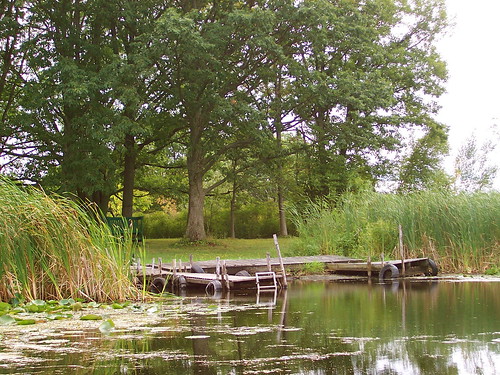
When we returned to the dock, we both commented on how strange it looked to see the dock empty. On hot summer days, the dock is always crowded with family members sunning themselves, or washing their hair, or crowding into the boats to go out to an island for a swim. My father is often sitting on his sailboat, fixing something. The docks are usually piled with bright orange life jackets, and sneakers left behind by anyone climbing into a boat, and beach towels that have been used and dropped into a heap.
But in September, the dock looks bare. All the boats – my Dad's sailboat, the two small motorboats, all the canoes – have been pulled up onto the land, where they will remain for the winter. The season is over.
September 04, 2006
Rainy day at camp
The sound of rain hitting the nylon walls of a tent is as soothing as a lullabye, a music meant for daydreaming. An all-day rain gives me reason to snuggle under blankets, warm and dry, and take a nap in the middle of the day. On a rainy day at camp, family members disappear into tents and cars, some with books or journals, some with pillows, some with spouses. I can spend hours in my little tent just talking and snuggling with my husband, listening to the patter of the raindrops, or alone with my journal, thinking about the year. A lazy rain at camp is something to savor.
So when a storm moving north arrived at camp on Saturday, I welcomed the cool winds and rain. When the sky cleared for just a bit, I took a sail on my brother's new sailboat, a Rhodes Bantam. All three of us – me, my brother, and my brother's girlfriend – were soon wet just from launching the boat, but we had a great sail, despite the wet clothes that made the fall wind seem chilly. I have years of sailing experience, but my father's boat is the only boat I've ever sailed so it was fun to try sailing a smaller boat that is built for racing. It was less stable than my Dad's boat, but faster. My brother's girlfriend suggested we sail to an island owned by someone she knows, and it took us several tacks to get there. On our way home, the wind was gusty, and we came across the wide river pretty fast, even almost putting the rail under at one point. It's been over thirty years since those faraway summer days when my father used to take my brother and me out on his boat to teach us to sail, but I couldn't help but remember those childhood summers as my brother and I fell into the familiar sailing talk and consulted each other about what to do next: "Hey, let's do a controlled jibe. Then we can go across in a broad reach."
After sailing for a couple of hours I felt chilled through. Back at camp, I peeled off my wet clothes and wet sneakers. Over the goosebumps on my bare skin, I pulled dry socks, dry underwear, dry sweat pants, and the most luxurious item I own, down booties. It is worth it to get cold and wet to have that wonderful sensation of warmth.
The rain let up again briefly early evening, and everyone emerged from tents and vehicles for hot vegetable soup, pasta salad, and cookies. My brother-in-law grilled chicken and veggie burgers. We gathered around the firepit, pulling lawn chairs and picnic table benches close to get near the warmth of a crackling fire. Everyone's socks and sneakers were wet from walking through the wet grasses – or stomping through the many muddy puddles scattered about – so we all shifted to get our cold feet as near as we could to the glowing coals. And despite the nap I had had earlier that day, it still felt good to crawl into my small tent and fall asleep to the pattering of raindrops.
So when a storm moving north arrived at camp on Saturday, I welcomed the cool winds and rain. When the sky cleared for just a bit, I took a sail on my brother's new sailboat, a Rhodes Bantam. All three of us – me, my brother, and my brother's girlfriend – were soon wet just from launching the boat, but we had a great sail, despite the wet clothes that made the fall wind seem chilly. I have years of sailing experience, but my father's boat is the only boat I've ever sailed so it was fun to try sailing a smaller boat that is built for racing. It was less stable than my Dad's boat, but faster. My brother's girlfriend suggested we sail to an island owned by someone she knows, and it took us several tacks to get there. On our way home, the wind was gusty, and we came across the wide river pretty fast, even almost putting the rail under at one point. It's been over thirty years since those faraway summer days when my father used to take my brother and me out on his boat to teach us to sail, but I couldn't help but remember those childhood summers as my brother and I fell into the familiar sailing talk and consulted each other about what to do next: "Hey, let's do a controlled jibe. Then we can go across in a broad reach."
After sailing for a couple of hours I felt chilled through. Back at camp, I peeled off my wet clothes and wet sneakers. Over the goosebumps on my bare skin, I pulled dry socks, dry underwear, dry sweat pants, and the most luxurious item I own, down booties. It is worth it to get cold and wet to have that wonderful sensation of warmth.
The rain let up again briefly early evening, and everyone emerged from tents and vehicles for hot vegetable soup, pasta salad, and cookies. My brother-in-law grilled chicken and veggie burgers. We gathered around the firepit, pulling lawn chairs and picnic table benches close to get near the warmth of a crackling fire. Everyone's socks and sneakers were wet from walking through the wet grasses – or stomping through the many muddy puddles scattered about – so we all shifted to get our cold feet as near as we could to the glowing coals. And despite the nap I had had earlier that day, it still felt good to crawl into my small tent and fall asleep to the pattering of raindrops.
September 01, 2006
Off to camp
This first week of the semester is always tiring. My body is adjusting to the routine of getting to campus in time to teach early morning classes, my mind is adjusting to the flurry of questions from advisees and the routine of preparing for class, and my whole self is agonizing at all the mandatory meetings. I am ready for a long weekend at camp.
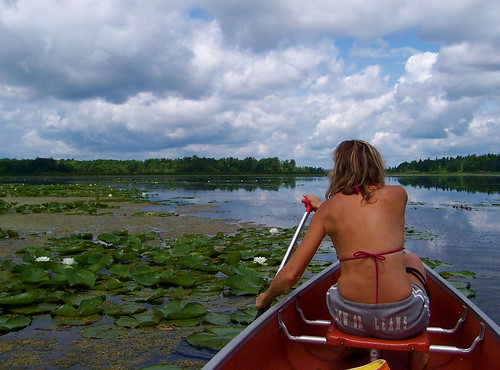
At the end of August, the water level is low, and the bay is filled with weeds and lily pads. It's a perfect time for canoeing through the marsh, for swimming in the sun-warmed river, and for sitting around a campfire at night. The mosquitoes should be gone -- and the nights will be cool, just right for a sweatshirt and long pants, cold enough that snuggling up to a spouse in a small tent will feel great.
The extended family that gathers for Labor Day will be smaller than usual -- two of my nieces have already moved back to grad school in the Big City Like No Other, and my two oldest kids will be spending the weekend on a college retreat with other students from Snowstorm University. But my younger two kids will have cousins to play with. My husband and I will have time to take long afternoon walks, just the two of us, to talk over all that happened this summer and make plans for the fall.
Labor Day weekend is my transition from summer to fall. And camp provides space for thinking, for planning, for reflection. It will feel good to get away from the computer, the telephone, the radio, and all the demands of campus. I'll lie in the hammock and watch the geese gathering in the bay, or sit under the oak trees, listening to the acorns as they fall to the ground. And if we get some sunny weather, we will soak in as much sun as we can. Because this is the last weekend of summer.
Subscribe to:
Posts (Atom)